Updated October 2, 2026 · Written by the AMSY Editorial Team · Reading time: 8 min
Home energy audit cost is the first question most homeowners ask, and the U.S. Department of Energy (DOE) gives a plain answer: roughly $250 to $600 or more for a professional assessment. This guide explains what that price buys, which free and low-cost routes exist, and what has changed with the federal tax credit.
Key takeaways
- DOE says a professional home energy assessment can cost from approximately $250 to $600 or more, and many contractors lower the fee if you hire them for the upgrades.
- A do-it-yourself walk-through is free, and DOE publishes the steps.
- Households at or below 200% of the federal poverty guidelines, or receiving Supplemental Security Income, can qualify for a free audit through the Weatherization Assistance Program. Expect a waitlist.
- The IRS lists the federal home energy audit credit (up to $150) for property placed in service before December 31, 2025, so an audit done now falls outside it.
Home energy audit cost: the short answer
According to the DOE consumer guide to home energy assessments, a professional assessment can cost from approximately $250 to $600 or more. DOE adds that many contractors perform the assessment at a reduced rate if you hire them to make the upgrades the report recommends. That guide dates from 2021, and DOE does not set what assessors charge, so treat the range as a starting point and collect two or three quotes in your area.
The price depends on what you buy. A DIY walk-through costs nothing. A professional visit with equipment costs the amounts above. A Home Energy Score assessment, DOE’s standardized rating, is priced by the local market: DOE says it is often offered as part of another audit or inspection service, so the cost may be built into that fee.
What a home energy audit cost actually buys
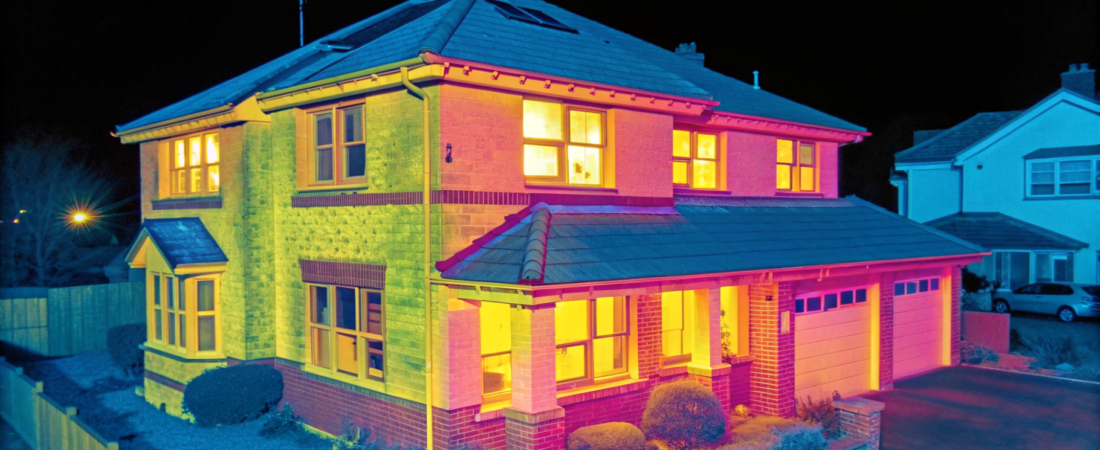
A professional assessment is a detailed, equipment-based look at how efficiently your house uses energy. DOE describes the two most common techniques as a blower door test and an infrared camera scan, often done together. During these tests the assessor may also inspect your heating and cooling systems, test for natural gas leaks, and check that the home is properly ventilated.
- Initial walkthrough. The assessor looks at your daily energy use patterns, overall and room by room.
- Blower door test. A powerful fan mounted in a doorway lowers the pressure inside so outdoor air flows in through unsealed gaps. DOE advises making sure the blower door is calibrated and connected to a manometer: without that measurement it can spot leaks but not the amount of leakage.
- Duct blower (sometimes). A variable-speed fan attached to the duct system measures air leakage inside the ductwork.
- Thermographic scan. An infrared camera shows temperature differences along walls, roofs, windows and doors. Combined with a blower door test, air leaks show up as black streaks in the image.
- Written report. The assessor should give you a report of the findings and ideas for improvements.
Is a home energy audit worth the cost?
The audit itself does not lower your bill. The upgrades it points to do. DOE says you may only need to air seal small gaps and add attic insulation, or it may be cost-effective to make bigger upgrades such as replacing heating and cooling equipment.
For a sense of payback, DOE’s Home Energy Score FAQ states that improvements recommended by its scoring tool will generally pay back in 10 years or less, with some paying off within a couple of years and others taking longer. That is a modeled estimate for typical households, not a guarantee for your house. An audit makes the most sense if you have drafty rooms, condensation, or high bills you cannot explain, and you plan to act on the report.
Ways to lower your home energy audit cost
Ask your utility first
DOE tells homeowners to check with their local electric or gas utility, or with their state or local energy or weatherization office, to find a certified assessor. Programs differ widely by utility and state, so check your utility’s website for assessment programs and any discounted options before you book a private auditor.
Free audits through the Weatherization Assistance Program
DOE’s Weatherization Assistance Program (WAP) serves income-eligible households. Under DOE guidelines, households at or below 200% of the federal poverty income guidelines, or that receive Supplemental Security Income, are eligible. States may instead use the Low-Income Home Energy Assistance Program (LIHEAP) criterion of 60% of state median income. Priority goes to elderly residents, people with disabilities, families with children, high-energy users and households with a significant energy burden.
The process, per DOE: identify your state weatherization administrator, find a local weatherization provider, submit proof of prior-year income such as pay stubs or Social Security statements, and, if you qualify, you are placed on a waitlist. The WAP audit includes an analysis of your energy bills, blower-door testing, and an inspection of all energy equipment and all areas of the home.
Ask for the fee to be credited against the work
Because DOE notes that many contractors reduce the assessment fee when you hire them for the upgrades, ask whether the audit fee will be credited against the work. Get the report in writing and compare it with a second quote before you sign.
Tax credit and home energy audit cost in 2026
Until recently, the Energy Efficient Home Improvement Credit (Section 25C) covered a home energy audit, limited to $150 a year. The IRS page for the credit describes it for qualifying property placed in service on or after January 1, 2023, and before December 31, 2025. An audit performed now falls outside that window, so do not budget for a federal credit. If you claimed it for 2025, the IRS says it goes on Form 5695, Part II, for the tax year the property was installed.
State, local and utility incentives are separate from the federal credit and vary by location. DOE points homeowners to the DSIRE database (dsireusa.org) to find local, state and federal incentive programs.
How to do a free DIY home energy audit
DOE says you can run a simple inspection yourself before paying for a professional. A DIY walk-through will not measure airflow, but it can reveal obvious problems.
- Check where different materials meet: brick and wood siding, foundation and walls, chimney and siding.
- Inspect around electrical outlets and switch plates, window and door frames, baseboards, attic hatches, window-mounted air conditioners, and vents and fans.
- Check that caulking and weather stripping are applied properly and in good condition.
- For a basic depressurization test, close all exterior doors, windows and fireplace flues, turn off combustion appliances such as gas furnaces and water heaters, and turn on exhaust fans that blow air outside. Then pass a lit incense stick around common leak areas: if smoke is drawn into or out of a room, there is an air leak.
- At night, have a partner look from outside while you shine a flashlight over suspected gaps; large gaps show up as rays of light. You can also shut a door or window on a piece of paper: if it pulls out without tearing, there is a leak.
What to ask before booking a professional
- Is the assessor certified? DOE says to use a certified assessor, usually a licensed contractor with experience installing heating and cooling systems, windows and lighting.
- Will they use a calibrated blower door with a manometer? That is what measures the actual air flow.
- What will the report include? DOE says it should list the findings and ideas for improvements.
- Is the fee credited if I hire you for the work?
Before the visit, DOE suggests listing indoor problems you have noticed, such as condensation or drafty rooms, and having copies or summaries of recent energy bills ready for the assessor.
Home Energy Score: a standardized option
DOE’s Home Energy Score rates a home on a 1 to 10 scale, where 10 is the most efficient. After an assessment of about one hour, during which the assessor collects about 40 pieces of information on the home’s envelope and its heating, cooling and hot water systems, you receive the score, facts about your home and recommended improvements. According to DOE’s FAQ, only single-family homes and townhomes can be scored, and the score is available only in areas served by DOE partners. That FAQ dates from 2015, so confirm availability for your address at homeenergyscore.gov.
FAQ
How much does a home energy audit cost?
DOE puts a professional home energy assessment at approximately $250 to $600 or more. Prices are set by assessors, and many contractors reduce the fee if you hire them for the resulting upgrades.
Is there a tax credit for a home energy audit in 2026?
The IRS lists the federal credit, which included up to $150 for an audit, for property placed in service before December 31, 2025, so an audit done now falls outside it. Check state, local and utility programs, which are separate.
Who qualifies for a free home energy audit?
Under DOE guidelines, households at or below 200% of the federal poverty income guidelines, or receiving Supplemental Security Income, qualify for the Weatherization Assistance Program, though states may apply a different income test. Applicants are placed on a waitlist.
How long does a home energy audit take?
DOE’s consumer guide does not give a duration for a full professional audit. DOE’s Home Energy Score walk-through takes about one hour.
Can I do a home energy audit myself?
Yes. DOE publishes a DIY walk-through, but without a blower door it cannot measure how much air your house leaks.
Our verification method
On October 2, 2026 we read the DOE consumer guide to home energy assessments (2021), the DOE Home Energy Score FAQ for homeowners (2015), the DOE Weatherization Assistance Program application page and the IRS page for the Energy Efficient Home Improvement Credit. Every cost figure in this article comes from DOE. We did not find a newer DOE price range and we have not averaged prices from contractor directories. Programs and eligibility rules change, so confirm details with your utility, state weatherization office or the IRS before you act.
Sources
- U.S. Department of Energy, Consumer Guide to Home Energy Assessments (2021)
- U.S. Department of Energy, Home Energy Score: Frequently Asked Questions for Homeowners (2015)
- U.S. Department of Energy, How to Apply for Weatherization Assistance
- Internal Revenue Service, Energy Efficient Home Improvement Credit